

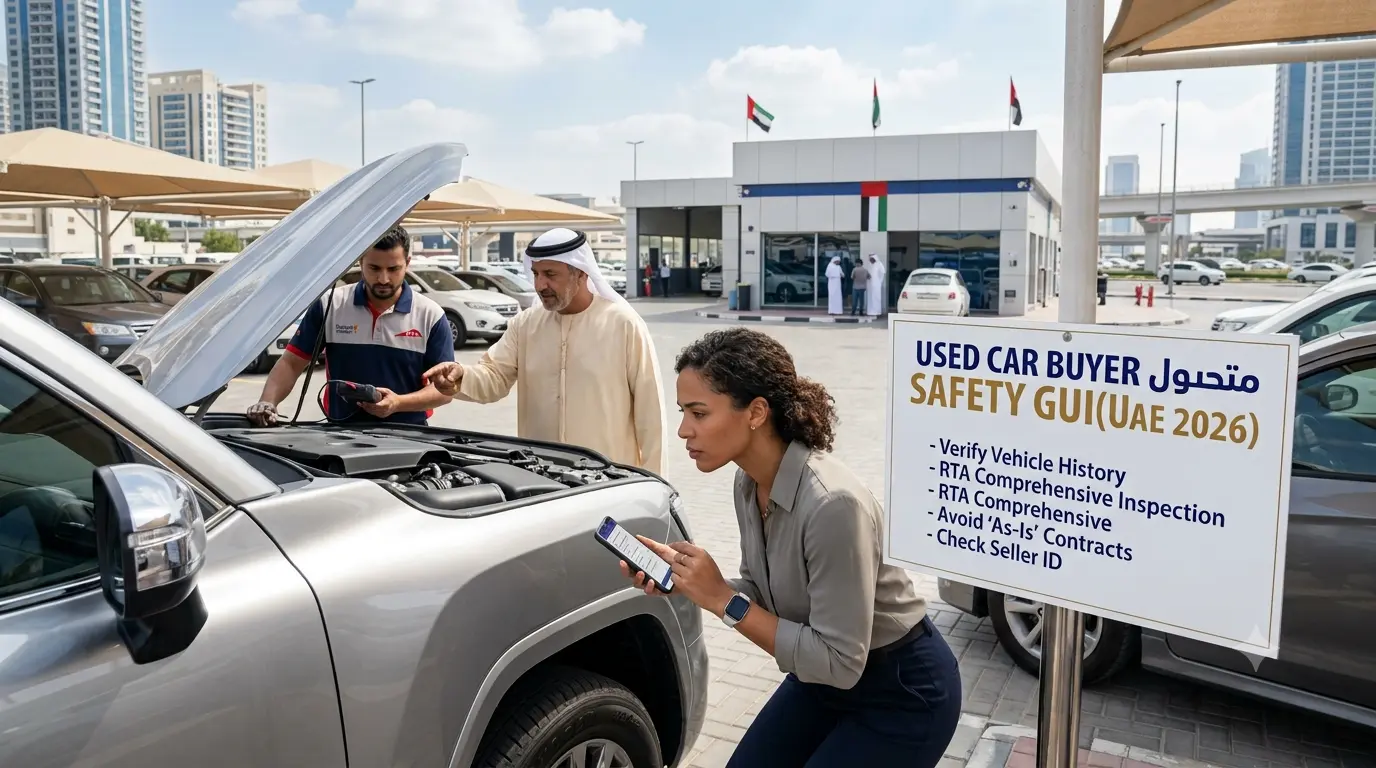

How to Avoid Used Car Scams in UAE
Buying a used car in the UAE can save you thousands of dirhams, but it also comes with risks if you don’t verify the vehicle and seller properly. Every year, buyers lose money due to fake advertisements, tampered mileage, hidden accident history, counterfeit payment confirmations, and illegal ownership transfers.
Whether you’re buying from a private seller or a dealership, following the correct process can help you avoid costly mistakes.
This guide explains the most common used car scams in the UAE, how to identify them, and the safest way to buy a second-hand vehicle while following UAE regulations and best practices.
Why Used Car Scams Happen
Scammers usually target buyers who:
- Rush into purchasing
- Skip vehicle inspections
- Ignore ownership verification
- Pay deposits without seeing the car
- Trust prices that seem too good to be true
Always remember:
If the price is far below the market average, there is usually a reason.
10 Common Used Car Scams in UAE
1. Fake Low-Price Listings
Scammers advertise luxury vehicles at prices far below market value to attract buyers quickly.
Warning Signs
- Seller is “currently overseas”
- Requests an advance payment
- Refuses physical inspection
- Claims delivery after payment
What to Do
✅ Never pay before seeing the vehicle.
2. Fake Deposit Scam
The seller asks you to reserve the car by paying AED 500–5,000 before inspection.
Once paid, the seller disappears.
Safe Practice
- Never transfer deposits to unknown individuals.
- Pay only after inspecting the vehicle and verifying ownership.
3. Odometer Rollback
Mileage is illegally reduced to increase the vehicle’s value.
Example:
Real Mileage:
240,000 km
Displayed:
125,000 km
How to Avoid
Check:
- Service history
- Inspection reports
- Previous maintenance records
- Vehicle inspection history
Community reports also highlight mileage tampering as a recurring issue, making independent inspections important.
4. Hidden Accident History
Some sellers repair heavily damaged cars and advertise them as “accident-free.”
Always ask for:
- Accident history
- Insurance repair records
- Professional inspection report
5. Fake GCC Specification Claims
Many imported vehicles are advertised as GCC specifications when they are not.
Always verify:
- VIN
- Original specification
- Country of origin
GCC-spec vehicles are generally better suited for the UAE’s climate.
6. Fake Ownership
Someone may sell a vehicle they don’t legally own.
Always verify:
- Emirates ID
- Registration Card (Mulkiya)
- Authorization if selling on behalf of the owner
If the details don’t match, walk away.
7. Fake Bank Transfer Screenshot
A buyer or seller may show a fake payment confirmation.
Never release the vehicle or complete the transfer until the money has been credited to your bank account.
8. Counterfeit Manager’s Cheques
Some fraudsters use fake certified cheques.
Always verify the cheque with the issuing bank before completing the transaction.
9. Online RTA Transfer Scam
Some scammers claim they can transfer ownership online without visiting an official center.
This is false.
Ownership transfers must be completed through the appropriate traffic authority or authorized testing/registration centers in the relevant emirate.
10. Pressure Selling
Scammers often say:
- “Many buyers are waiting.”
- “Offer expires today.”
- “Pay now.”
Never rush.
A genuine seller will allow time for inspection.
Checklist Before Buying Any Used Car
✔ Verify the VIN (Vehicle Identification Number)
✔ Compare mileage with service history
✔ Request complete maintenance records
✔ Inspect tyres
✔ Check engine oil leaks
✔ Test air conditioning
✔ Test brakes
✔ Inspect suspension
✔ Verify electrical systems
✔ Test all lights
✔ Confirm ownership documents
✔ Review accident history
✔ Ensure no outstanding fines or finance obligations where applicable
✔ Get a professional inspection before purchase
Always Get a Professional Vehicle Inspection
A professional inspection can identify:
- Engine issues
- Transmission problems
- Chassis damage
- Flood damage
- Suspension wear
- Electrical faults
- Accident repairs
The cost of an inspection is small compared with unexpected repair bills.
Verify the Documents
Before paying, check:
- Registration Card (Mulkiya)
- Emirates ID of the seller
- Insurance status
- Vehicle inspection certificate (where required)
- Service records
- Finance clearance (if applicable)
Meet in Safe Public Places
Recommended meeting locations:
- Vehicle testing centres
- Registration centres
- Public parking areas
- Shopping mall parking
Avoid:
- Empty locations
- Late-night meetings
- Unknown warehouses
Safe Payment Methods
Recommended:
- UAE bank transfer
- Cash at an official transfer centre
- Verified bank-certified cheque
Avoid:
- International money transfers
- Cryptocurrency payments
- Unknown payment links
- Unverified payment screenshots
Buyers and sellers in UAE automotive communities commonly recommend completing payment and transfer together at an official registration centre and confirming cleared funds before handing over the vehicle.
Complete Ownership Transfer Legally
Never rely on handwritten agreements.
Ownership should only be transferred through the official authority for your emirate or its authorized centres.
During transfer:
- Verify documents
- Pay applicable fees
- Transfer registration
- Update insurance
- Complete payment only after verification
Red Flags You Should Never Ignore
❌ Seller refuses inspection
❌ Price is far below market value
❌ No service history
❌ Mileage doesn’t match condition
❌ Seller avoids official transfer
❌ Wants advance payment
❌ Pressures immediate payment
❌ Refuses identity verification
❌ Uses copied photos
❌ Claims “first come, first served” with a deposit
Your Rights as a Buyer in the UAE
Under UAE consumer protection principles, sellers should provide accurate information about the vehicle and avoid misleading buyers. If you believe you’ve been the victim of fraud, keep all records, messages, receipts, and inspection reports, and report the matter to the appropriate authorities in your emirate.
Final Tips
Buying a used car in the UAE is safe when you follow the correct process:
- Research market prices.
- Verify the seller’s identity.
- Inspect the vehicle professionally.
- Check the service and accident history.
- Never pay before verification.
- Complete ownership transfer through the proper authority.
- Keep copies of all documents and payment records.
Taking these precautions will help you avoid scams and make a confident purchase.
Frequently Asked Questions (FAQ)
Is it safe to buy a used car from a private seller in the UAE?
Yes, provided you verify the seller, inspect the vehicle, check the documents, and complete the ownership transfer through the official process.
Should I pay a deposit before seeing the car?
No. Avoid paying deposits unless you have verified the seller and inspected the vehicle.
Can I transfer ownership online without visiting a registration centre?
Be cautious of anyone claiming unofficial online transfer services. Use the official transfer process required in your emirate.
How can I check if a used car has been in an accident?
Request the vehicle history, review maintenance records, and obtain an independent inspection. Where available, use official accident history services.
Is a professional inspection worth the cost?
Absolutely. It can reveal hidden mechanical, structural, and safety issues that may not be visible during a basic inspection.